Views: 0 Author: Site Editor Publish Time: 2025-11-23 Origin: Site
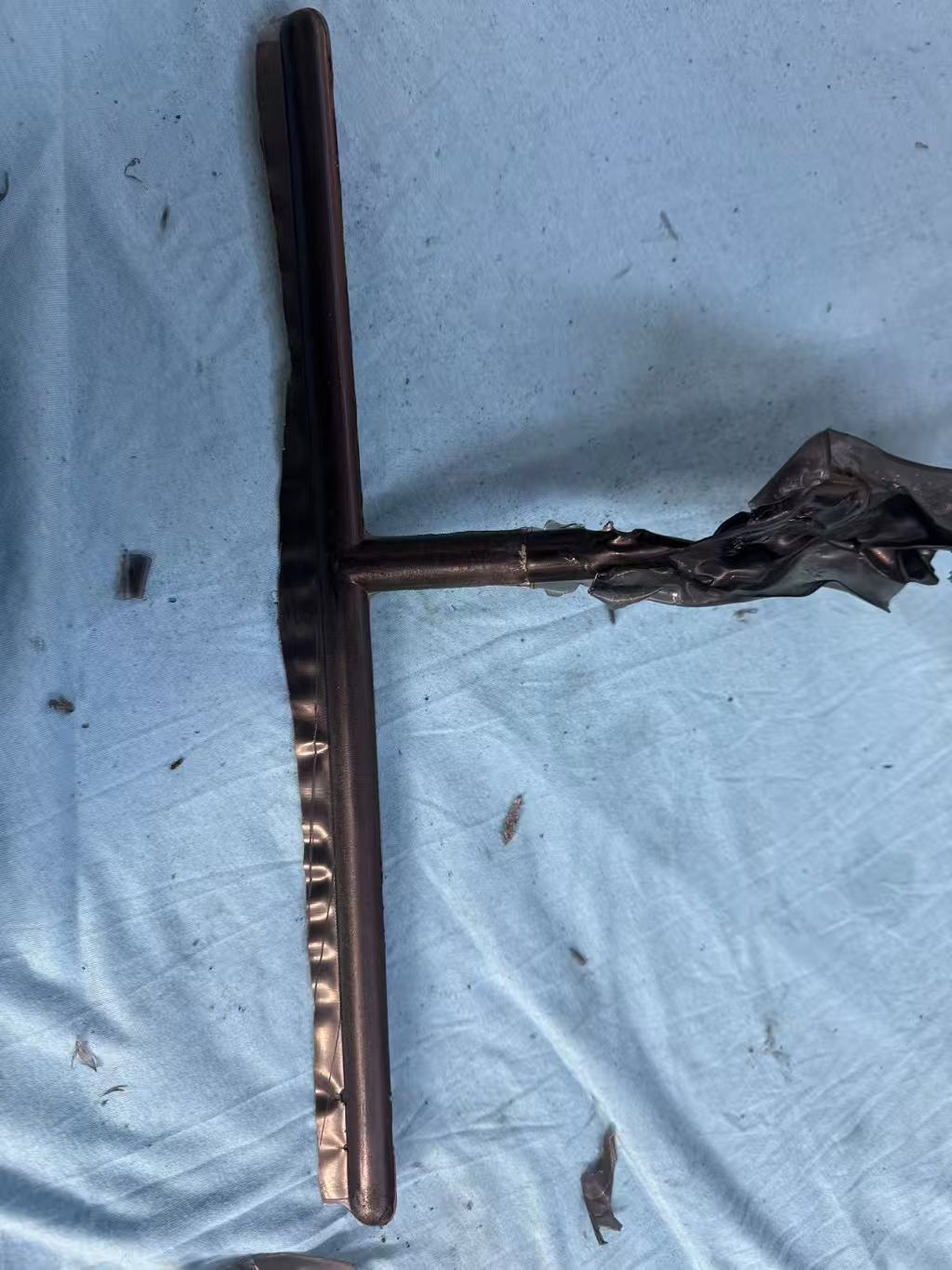
In the production of PDCPD (Polydicyclopentadiene) products, the simple impact performance test of breaking the gate strip (also known as "gate remnant" or "gate residue") is an empirical method based on the gate strips generated during actual product processing. It provides a quick and intuitive assessment of the material's impact toughness. Although it is not a standard laboratory test (such as Charpy or Izod impact tests), it is commonly used in factories for preliminary judgment of fluctuations in impact performance between material batches or process stability due to its simplicity, low cost, and consistency with actual production materials.
Below is a detailed introduction to this simple impact performance test method for "breaking the gate strip":
Has a straight strip shape with relatively uniform dimensions (e.g., width of about 10–20 mm, thickness of about 3–6 mm, length of several tens to over a hundred millimeters);
Is essentially the same material as the product itself, without the influence of complex structures;
Can be easily cut or broken off from the product for use as a test sample.
Why Can Gate Strips Be Used to Test Impact Performance?
Although gate strips are not specially prepared impact test specimens, their material composition and molding conditions are largely the same as those of the product. This is especially true for batches produced under the same conditions, as their resin ratio, degree of curing, and internal defects are representative. Therefore, by manually applying bending or impact force to break them, the toughness/brittleness trend of the material in that batch can be qualitatively assessed.
Remove a section of the gate strip (or excess material near the gate) from a freshly demolded PDCPD product. Typically, select straight strip-shaped material with a width of 10–20 mm, thickness of 3–6 mm, and length of 50–100 mm;
Ensure the gate strip has no significant visual defects (such as bubbles, impurities, or burn marks) to represent normal material;
Take multiple strips for repeated tests to improve judgment reliability.
Hold both ends of the gate strip with your hands or clamp them with pliers, allowing the gate strip to hang freely or lie flat;
Gradually apply bending force until the gate strip breaks;
You can hold both ends of the strip and bend them in opposite directions;
Or support the middle of the gate strip (e.g., on the edge of a table) and bend one end with your hand to apply force;
Observe the Fracture Mode and Difficulty:
High-toughness material: The strip will undergo significant bending deformation during the process. When it finally breaks, it may produce a sharp "crack" sound, but the fracture surface is relatively blunt, with signs of plastic deformation, and it does not shatter suddenly;
Low-toughness/brittle material: The strip breaks suddenly with slight bending, the fracture surface is neat and sharp, and may even produce debris, breaking at a very small bending angle.
Empirical Judgment: If the gate strips of the current batch break more easily than before, with clean fractures and no significant bending, it may indicate that the impact performance of the PDCPD material in this batch has decreased, making it more brittle. Conversely, if the gate strips require greater force to break and show obvious bending deformation, it indicates better material toughness.
Gently striking a specific part of the gate strip with a small hammer or weight from a certain height (not directly smashing, but simulating an impact load);
Observing whether fracture or crack propagation occurs easily;
This method is closer to an impact load but is more subjective and requires some experience.
Analysis of Advantages and Disadvantages
✅ Advantages:
Simple and quick: No need to prepare standard test specimens or use professional impact testing machines;
Intuitive and reliable: Material brittleness trends can be quickly identified through experience;
Consistent with actual material: The gate strip comes from the same batch as the product, ensuring strong representativeness;
Low cost: No additional equipment or sample preparation time required.
❌ Disadvantages:
Non-quantitative test: Cannot provide specific impact strength values (e.g., kJ/m²);
Subject to human factors: Results may vary slightly due to differences in bending speed, angle, and force;
Only qualitative or semi-quantitative judgment: Suitable for batch comparison or production process monitoring but cannot replace standard tests;
The gate strip itself may have minor differences: Such as uneven thickness or local overheating, which can also affect the results.
For production process control:
Retain some gate strips from each batch for quick testing;
If gate strips from a certain batch generally exhibit "brittle fracture," be alert to potential abnormalities in resin formulation, catalyst ratio, or curing conditions;
Combine with standard impact specimen tests for verification.
For quick comparison:
Use the gate strip bending method for preliminary screening when raw materials, suppliers, or process parameters are changed;
If obvious brittleness is observed, proceed with standard impact tests.
Combine with other simple methods:
Such as the sound test upon striking (a crisp sound may indicate brittleness, a dull sound may indicate toughness) and fracture morphology observation, for comprehensive judgment.
Prepare standard impact test specimens (e.g., Izod or Charpy specimens according to ASTM D256 or ISO 180);
Use a pendulum impact tester for quantitative testing to obtain specific impact strength values;
Establish a correlation between the gate strip bending method and standard impact values (through extensive data accumulation and regression analysis) to "standardize" the simple method.
| Item | Breaking Gate Strip Impact Test Method |
|---|---|
| Method | Manually bend or strike PDCPD gate strips, observe fracture difficulty and morphology |
| Purpose | Quick qualitative judgment of changes in PDCPD material impact toughness/brittleness |
| Advantages | Simple, quick, low cost, good material consistency |
| Disadvantages | Non-quantitative, experience-dependent, results for reference only |
| Applicable Scenarios | Quick on-site production testing, batch comparison, process monitoring |
| Recommendation | Can be used as a daily monitoring method, supplemented by regular standard impact tests |