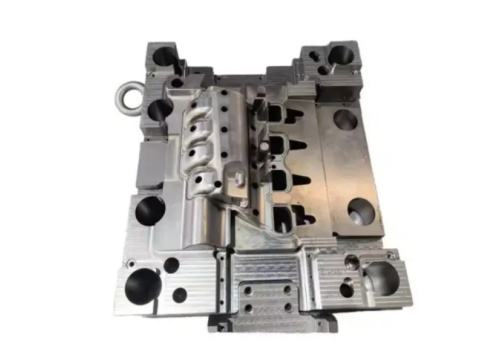
The production of car bumpers is an essential part of the automotive industry, and car bumper molds play a crucial role in shaping these essential components. A car bumper mold ensures that the final product is consistent in quality, design, and durability. Given the importance of bumpers in terms of both safety and aesthetics, understanding the manufacturing process of a car bumper mold is vital for ensuring the overall quality and efficiency of the production process.
In automotive manufacturing, bumper quality is judged immediately. Even a small surface defect, dimensional deviation, weld mark, sink mark, flash line, or warpage issue can create assembly trouble, painting problems, or visual rejection at the customer end.
When manufacturers talk about bumper quality, they often focus on part design, injection parameters, or cycle time. Yet one of the most important decisions is made much earlier, at the mould material selection stage.
When it comes to manufacturing car bumper molds, precision, efficiency, and high-quality standards are critical. Car bumpers, being an essential part of vehicle safety and design, must be produced with utmost care and accuracy.
In automotive exterior manufacturing, bumper components may look similar at a glance, but the mould design behind them often reflects very different engineering priorities.