Views: 0 Author: Site Editor Publish Time: 2026-05-01 Origin: Site
Open an SMC electrical cabinet, automotive panel, or equipment cover, and the surface may appear clean and straightforward. Under that surface, however, the mold has handled high pressure, heated compression, fiber orientation, resin flow, flash control, and dimensional stability. SMC Mold Design: Sheet Molding Compound Processing matters because small design decisions inside the tool can decide whether the finished part is strong, repeatable, and easy to assemble.
Sheet molding compound is valued for strength, corrosion resistance, and efficient production of complex shapes. Still, it requires tooling that understands material charge placement, cavity balance, heating control, ejector layout, and trimming needs. Taizhou Huangyan Shengfa Mould Co., Ltd. supports composite tooling projects through practical experience with SMC mold development for industrial and transportation applications.
This guide breaks down the design logic behind SMC molds. It focuses on processing behavior, tooling structure, buyer evaluation points, and the technical details that help reduce defects during mass production.
Smc Mold Design connects product design with the physical behavior of the selected material. In a real project, the buyer may focus on the final part, while the mold maker has to think about filling, curing, shrinkage, venting, surface release, insert placement, clamping, and repeated production. This is why SMC mold planning should begin before the final drawing is locked.
The material side matters because sheet molding compound is a fiber-reinforced thermoset material supplied as a sheet charge and shaped under heat and pressure. A tool that works for a simple plastic part may not work for a reactive polymer, a fiber-reinforced compound, or a large exterior panel. The mold must be designed for the material system, not only for the finished shape. Good tooling turns a material advantage into a stable production advantage.
Early planning helps remove hidden risks. Wall thickness, rib direction, boss design, inserts, draft angle, and surface texture all influence mold structure. If these details are reviewed late, the project may need design changes after machining has already started. That slows development and creates extra adjustment work.
A better approach is to review the part as a complete molding problem. The mold maker studies where the material enters, where air escapes, where the part may shrink, and how the part will be removed. This early review also supports better decisions about heating channels, cooling areas, reinforcing plates, and lifting points.
Every molding material has its own habits. Some materials flow easily but react quickly. Some compounds need high pressure and controlled heating. Fiber-reinforced materials may carry orientation issues that affect strength and surface appearance. The mold must guide these behaviors instead of fighting them.
That is why projects involving reaction injection molding or SMC mold need technical discussion around processing windows. The goal is not only to build a strong tool. The goal is to build a tool that supports consistent molding over many production cycles.
Not every project requires the same tool structure. The right choice depends on part size, annual volume, surface requirement, material system, and maintenance expectations.
This solution is suitable when the part requires controlled filling and stable geometry. The mold design must consider parting line location, sealing, venting, and access for cleaning. Buyers should confirm whether the mold structure can handle the expected production rhythm and whether trial adjustments are included.
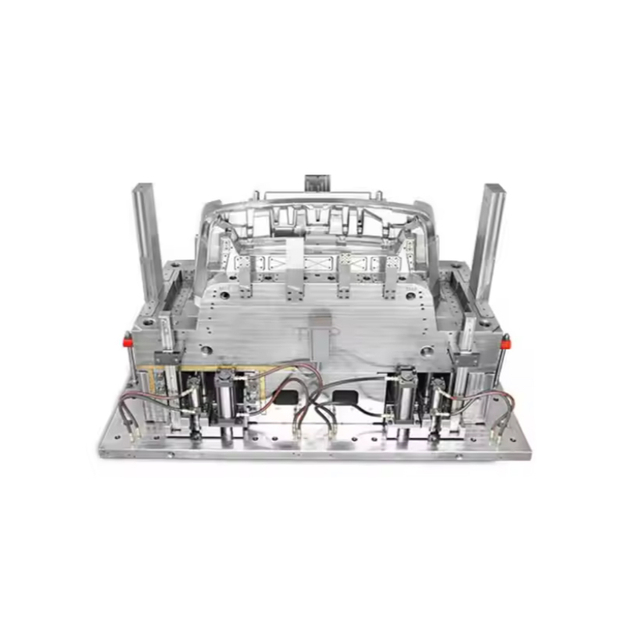
Reinforced molds are used when the molded part is large, heavy, or dimensionally sensitive. Strong backing structures reduce deformation during molding. This is especially important for long panels, wide covers, and parts with visible surface areas.
Heating and temperature control are critical for many thermoset and reactive molding projects. Uneven temperature can create curing differences, surface marks, and dimensional variation. A well-designed heated mold uses balanced zones to keep the process repeatable.
Many industrial parts need metal inserts, brackets, hinges, threaded sleeves, or embedded hardware. Insert-ready tooling improves assembly efficiency, but it also requires careful location control. Poor insert positioning can create stress, leakage, or assembly mismatch.
The success of sheet molding compound compression molding depends on matching material, mold surface, and process settings. Buyers often ask whether a mold can simply be made from a drawing. The better question is whether the drawing has been reviewed for the selected process.
For large molded parts, material flow can be difficult to predict without experience. Thick and thin areas may cure at different speeds. Ribbed zones may trap air. Sharp corners may create stress. A mold design team needs to understand these issues before final machining.
Surface quality is often a major concern for visible parts. Exterior vehicle panels, equipment covers, and customer-facing housings must look clean after molding. The mold surface has to be polished, textured, coated, or treated according to the finished part requirement.
Release behavior is just as important. A part that looks good in the cavity but is difficult to remove will create production delays and possible damage. Draft angle, ejector location, parting line design, and surface treatment work together to make demolding stable.
Most molded materials change dimension during cooling or curing. The mold must compensate for this movement. Shrinkage is not always equal in every direction, especially when fiber reinforcement or uneven wall thickness is involved. Good mold design includes realistic tolerance planning instead of promising impossible accuracy.
For assembly parts, the design team should identify critical dimensions. These may include mounting holes, edge profiles, sealing surfaces, and insert positions. Inspection should focus on those points rather than treating every dimension as equally important.
A reliable mold project follows a disciplined sequence. Skipping steps may look faster at first, but it often creates problems during trial and production.
The first step is to review the part drawing, material, production target, and application environment. The mold maker checks draft, wall thickness, ribs, inserts, surface class, and expected molding process. This review identifies design risks before tooling work begins.
The mold concept defines cavity layout, parting line, feed system, heating or cooling method, ejection, lifting, and support structure. For large parts, the backing frame is especially important because it prevents deformation during operation.
Mold steel, aluminum, composite backing, guide components, heating elements, and standard parts must be selected according to the production goal. A tool used for repeated production needs stronger planning than a short development tool.
Precision machining creates the cavity shape. After machining, polishing, fitting, surface coating, or texturing may be required. Surface work can strongly influence part appearance, release behavior, and maintenance needs.
The mold is assembled and checked before trial. During trial, the team observes filling, venting, demolding, surface condition, and dimensional performance. Adjustments may be required to improve stability.
Before delivery, the mold should be checked against drawings and project requirements. Documentation helps the buyer understand setup, maintenance, and inspection points.
Smc Mold Design is used across industries where standard plastic tooling cannot fully meet size, strength, or performance needs. Common applications include electrical cabinets, automotive panels, battery covers, sanitary components, industrial trays, and structural composite covers. Each application has different priorities, which is why the mold must be designed around the end-use environment.
Vehicle parts often require a balance of strength, low weight, and surface appearance. Large exterior panels need stable geometry and clean surfaces. Commercial vehicles may also need corrosion resistance and impact performance.
Machine covers and industrial housings protect equipment from dust, impact, weather, or chemicals. These parts may be large and complex, making custom mold planning important.
Agricultural and construction machinery parts are exposed to vibration, sunlight, mud, and mechanical impact. The mold must support materials that can handle these conditions.
Choosing a mold supplier is a technical decision. A good supplier should ask detailed questions instead of rushing directly to manufacturing.
The supplier should review part drawings, material, process, tolerance, and application. Strong communication early in the project reduces misunderstandings later.
A supplier experienced in sheet molding compound compression molding will understand venting, flow, curing, demolding, and surface control. This process knowledge is more valuable than machining capacity alone.
Buyers should request drawings, inspection records, and trial feedback. A mold is a long-term production asset, so documentation helps future maintenance and troubleshooting.
Good molds are designed for service. Wear plates, inserts, seals, heating elements, and high-contact zones should be accessible when maintenance is needed.
A structured comparison helps buyers evaluate capability without relying on brand names. The table below uses anonymous competitors and typical industry criteria. It focuses on engineering support, documentation, customization, and long-term service logic.
Specification | Taizhou Huangyan Shengfa Mould Co., Ltd. | Competitor A | Competitor B | Industry Average |
|---|---|---|---|---|
Mold Engineering | Project-specific mold design and feasibility review | Standard mold design | Basic drawing conversion | Depends on project complexity |
Process Support | Material, flow, venting, and demolding advice | Limited process advice | Basic machining focus | Moderate support |
Customization | High support for large and complex parts | Medium customization | Limited customization | Varies by mold type |
Trial Adjustment | Mold trial feedback and correction support | Trial support available | Limited adjustment | Common for custom tools |
Documentation | Drawing, material, inspection, and project records | Partial documents | Basic records | Documentation level varies |
Long-Term Value | Built around repeatable molding and maintainability | Standard service life | Shorter project focus | Depends on design discipline |
A custom project should be reviewed through technical documents, not only through a visual quotation sheet. Buyers can use the following specification table to align product design, process expectations, and acceptance checks.
Specification Area | What to Confirm | Why It Matters |
|---|---|---|
Part Geometry | Size, ribs, inserts, draft, undercuts, surface class | Controls mold structure and demolding plan |
Material System | Resin, compound, fiber content, reaction behavior | Affects cavity design, shrinkage, temperature, and pressure |
Mold Material | Steel, aluminum, composite backing, surface treatment | Determines durability, weight, and repair method |
Process Parameters | Filling method, compression force, curing, heating, venting | Connects mold design to stable production |
Tolerance Targets | Critical dimensions and inspection points | Prevents assembly problems after molding |
Surface Requirement | Texture, gloss, paint readiness, Class-A needs | Determines polishing, coating, and finishing workload |
Maintenance Plan | Wear areas, replaceable inserts, cleaning access | Extends usable mold life and lowers downtime |
Quality control begins with design review and continues through manufacturing, trial, and production support. Mold quality cannot be checked only at the end because many important decisions are already built into the tool.
Critical dimensions should be measured on both the mold and trial parts. This confirms whether the mold can support assembly and function. For large parts, inspection should account for temperature, fixture support, and part relaxation after demolding.
Surface defects may come from machining marks, release problems, air traps, or uneven curing. Inspection should check visible zones carefully, especially if the part will be painted or used as an exterior component.
A mold trial should produce useful information. The team should record filling behavior, cycle stability, demolding effort, flash, surface marks, and dimensional results. This feedback helps refine the mold before full production.
A mold may look strong, but repeated production creates wear. Cleaning, lubrication, surface protection, and controlled storage are all important.
Material residue can affect surface quality and release. Operators should clean the cavity according to the process requirement. Harsh cleaning tools can damage polished surfaces, so maintenance instructions should be clear.
Replaceable inserts and high-contact areas should be checked regularly. Early detection of wear prevents larger repair work. For heated molds, electrical and temperature systems should also be inspected.
Moisture, dust, and impact can damage a mold during storage. Buyers should store tools in a dry, controlled space and protect cavity surfaces before long-term storage.
Industrial buyers are asking for molds that support lighter parts, cleaner surfaces, shorter development cycles, and better documentation. Composite materials, reaction molding, and large-format industrial parts continue to grow because they help manufacturers combine design flexibility with functional performance.
Another trend is stronger collaboration between part designers and mold makers. Instead of sending a finished drawing to a tool shop, buyers increasingly involve mold engineers earlier. This reduces revision loops and improves production results.
Digital design tools also support better mold planning. Simulation, 3D scanning, CNC programming, and inspection records make it easier to control complex projects. However, software does not replace practical molding experience. The best results come when digital tools and hands-on process knowledge work together.
A strong mold project often succeeds because engineering details are handled before manufacturing begins. A rib may look simple on a drawing, but it can influence flow, shrinkage, ejection, and surface marks. An insert may appear small, but poor positioning can affect assembly accuracy. A surface texture may seem decorative, but it may change release behavior. These details are why mold development should be treated as a technical project rather than a simple purchase.
Buyers should also think about the complete production environment. Will the mold run in a dedicated press or move between machines? Will operators have experience with the material? Is the part painted, assembled, bonded, or exposed outdoors? Each answer affects mold design and maintenance planning.
Another useful practice is to identify critical-to-function dimensions. Not every dimension has the same importance. Mounting holes, sealing edges, insert positions, and visible surfaces usually deserve tighter attention. By focusing inspection on key areas, buyers can control quality more effectively.
Communication should be visual and documented. 3D files, 2D drawings, marked-up images, material sheets, sample photos, and inspection plans help both sides understand the project. Clear documents reduce misunderstanding and make mold trial more efficient.
One common risk is finalizing the mold before the part design is ready for the process. A part designed without draft, with uneven wall thickness, or with poorly placed ribs may create molding problems. Early design review helps avoid this risk.
Another risk is overlooking venting and release. Air traps, flash, sticking, and surface defects often come from small design decisions. The mold should include proper vent paths, suitable parting line planning, and realistic demolding features.
A third risk is treating the trial as a simple approval step. A mold trial should be a learning stage. The team should record parameters, observe material behavior, check dimensions, and adjust the tool if needed. Good trial feedback improves long-term production.
Buyers should also avoid vague tolerance requirements. Extremely tight tolerance on a large molded part may not be realistic for the material and process. Practical tolerance planning creates better alignment between design intent and production reality.
A mold is a production asset. Its value depends on how consistently it helps produce acceptable parts. Strong initial design, good material selection, accessible maintenance areas, and clear documentation all improve lifecycle value.
Production planning should include cleaning routines, storage protection, spare inserts, heating system checks, and operator guidance. If these topics are ignored, the mold may perform well during trial but create problems later.
Buyers also benefit from thinking about future changes. Some products may need small modifications after market feedback. Replaceable inserts or flexible design areas can make updates easier. This approach is especially useful for large industrial parts and vehicle components.
Before confirming a SMC mold project, buyers should review part design, material system, process parameters, mold structure, surface requirement, critical dimensions, trial plan, inspection method, documentation, and maintenance access. This final review helps ensure that the project is ready for manufacturing and future production.
A careful selection process reduces risk, improves part quality, and creates a stronger partnership between the buyer and mold manufacturer.
A: A SMC mold is used to shape industrial parts through a controlled molding process. It supports material flow, curing or forming, surface quality, dimensional control, and repeatable production.
A: Smc Mold Design improves manufacturing by matching tool design with material behavior. This helps reduce defects, improve repeatability, and support stable production for complex parts.
A: Buyers should confirm part drawings, material system, tolerance targets, surface requirements, expected production volume, trial support, and maintenance access before ordering a SMC mold.
A: Yes. A SMC mold can be customized for large panels, covers, housings, and structural parts. The mold structure must be reinforced and designed around demolding, support, and dimensional stability.
A: Mold trial verifies whether the tool performs correctly in real processing conditions. It checks filling, venting, demolding, surface quality, and part dimensions before production use.
A: Buyers can extend mold service life through regular cleaning, proper storage, inspection of wear areas, correct process settings, and timely repair of small issues.
SMC Mold Design: Sheet Molding Compound Processing shows why custom mold projects need more than basic machining. Material behavior, tool structure, processing conditions, inspection, and maintenance all affect final production performance. For buyers evaluating SMC mold solutions, the best results come from early technical communication, clear specifications, realistic tolerance planning, and a supplier that understands both tooling and production use.