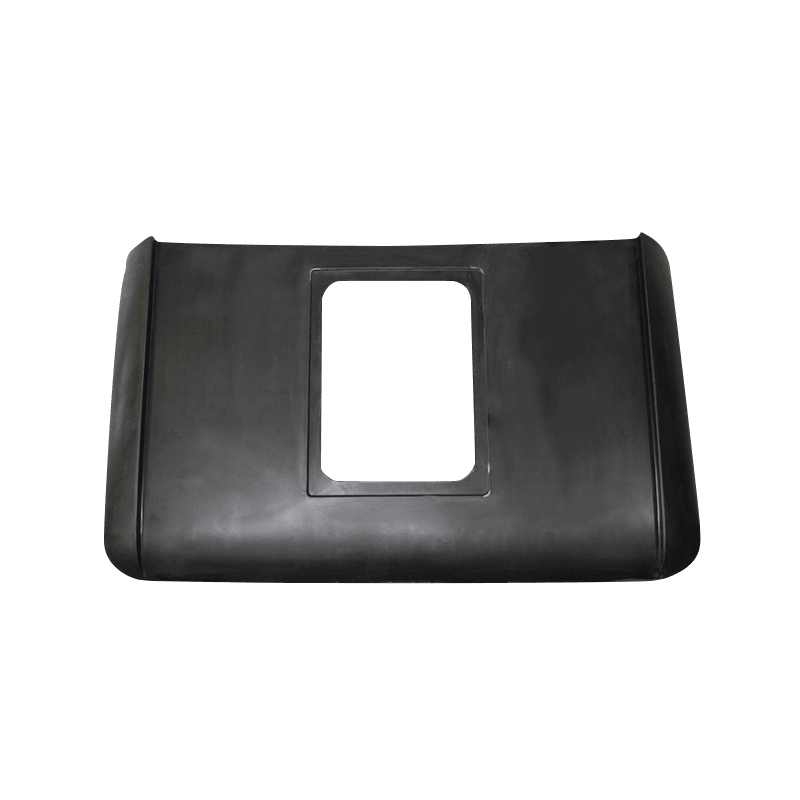
Views: 0 Author: Site Editor Publish Time: 2026-06-26 Origin: Site
The global transition to electric and hybrid transit fleets demands aggressive lightweighting. Engineers must achieve profound mass reduction. They cannot sacrifice structural integrity. They must maintain long-term weatherability under extreme conditions. Dicyclopentadiene (DCPD) processed via reaction injection molding (RIM) emerges as a powerful engineering solution. It serves as a highly viable alternative to traditional metals. It outperforms standard fiberglass reinforced plastic (FRP). It offers clear advantages over sheet molding compound (SMC) for massive exterior panels.
We designed this guide to equip procurement and engineering teams. You will gain a clear technical and commercial framework. This knowledge helps you evaluate a dcpd roof mold investment confidently. Our analysis breaks down tooling realities and production scalability parameters. You will discover practical strategies to handle multi-material integration, dimensional stability, and fluid dynamics. This specific insight directly supports successful mass production rollouts for modern transit systems.
Weight Reduction: DCPD offers significant weight savings over traditional steel and aluminum, directly improving fuel efficiency and EV battery range.
Part Consolidation: A well-engineered bus roof mold allows for single-piece manufacturing, eliminating the need for complex multi-part assembly and reducing failure points.
Tooling ROI: While initial CapEx for DCPD roof tooling is substantial, it yields lower per-part costs, faster cycle times than hand-laid FRP, and superior tooling lifespan.
Durability: DCPD provides high impact resistance, excellent chemical and corrosion resistance, and Class A surface finish potential, crucial for commercial transit exteriors.
Transit operators constantly battle inefficiencies linked to vehicle mass. Traditional multi-material roof assemblies suffer from distinct engineering flaws. They demand high assembly labor. They generate excessive curb weight. They also introduce joint-leakage vulnerabilities across overlapping metal and plastic panels. These structural joints face constant vibration. Over time, fasteners loosen. Sealants degrade. We see these issues routinely escalate costly warranty claims.
A successful transition toward composite materials relies on strict success criteria. You need a material balancing extreme lightweighting against high impact resistance. The chosen tooling process must also scale economically across mid-to-high volume fleets. You cannot rely on slow, manual processes. This brings us to bus component manufacturing advancements utilizing specialized polymers.
DCPD effectively bridges the material performance gap. It delivers the toughness typically reserved for premium engineering thermoplastics. Simultaneously, it provides the low-viscosity processing advantages inherent to thermoset resins. This unique chemistry allows engineers to mold massive, continuous geometries. A single continuous shell absorbs impact energy beautifully. It bounces back from low-speed strikes or hail damage without permanent deformation.
You must evaluate the return on investment carefully. The upfront mold capital is undeniably significant. However, you recover these funds through downstream operational savings. Operators benefit from radically reduced assembly labor. Technicians install fewer mechanical fasteners. The lowered vehicle curb weight directly extends battery range. Furthermore, monolithic designs radically decrease lifetime warranty claims tied to joint leaks and rust.
Engineers must weigh liquid RIM against legacy processes. Open mold FRP remains heavily reliant on manual labor. Workers hand-lay fiberglass mats. This practice exposes facilities to high styrene emissions. Environmental regulations strictly penalize these emissions globally. In contrast, DCPD utilizes an automated, closed-mold reaction injection process. This shift guarantees dimensional consistency across production runs. It drastically reduces internal voids. Furthermore, closed-mold systems ensure strict workplace safety compliance.
Let us analyze tooling pressures next. SMC demands massive hydraulic press tonnage. It forces highly viscous compounds into complex shapes under extreme force. DCPD functions completely differently. It relies on liquid molding techniques. The low-viscosity material flows freely into cavities. It requires significantly lower injection pressures than SMC. This low-pressure environment transforms your entire strategy. Manufacturers can deploy cast aluminum or lighter steel alloys. These metals offset major capital costs when developing large composite automotive parts.
Surface finish dictates aesthetic quality. Unfinished composites often require exhaustive sanding to hide fiber read-through. DCPD naturally takes paint exceptionally well right out of the tool. However, the mold surface demands precise texturing and polishing. Proper tooling treatments enable a true Class A finish. You avoid the excessive manual post-processing typically required by raw fiberglass panels.
Process Characteristic | DCPD (RIM) | SMC (Compression) | Open Mold FRP |
|---|---|---|---|
Tooling Pressure | Low (10-50 psi) | Very High (1000+ psi) | None (Ambient) |
Mold Material | Aluminum / Mild Steel | Hardened Tool Steel | Fiberglass / Epoxy |
Production Volume | Medium to High | High to Very High | Low to Medium |
Emission Control | Excellent (Closed) | Good (Closed) | Poor (Open) |
Developing a lightweight vehicle roof mold requires precise thermal and structural engineering. Large continuous surface areas remain highly prone to warpage. The chemical curing process triggers a strong exothermic reaction. This intense heat must dissipate evenly across the entire tool geometry. Precision temperature control channels within the mold mitigate internal stresses. They circulate specialized cooling fluids. This maintains strict thermal equilibrium during rapid polymerization. If thermal management fails, the final part will warp irreversibly.
Material flow dictates final structural integrity. Engineers must implement precise gating and venting strategies. Poor gating causes irregular fluid fronts. When these fluid fronts collide improperly inside the cavity, they form weak knit lines. Air entrapment further degrades mechanical strength. Effective layouts utilize strategic vents to expel displaced air. This prevents catastrophic cosmetic blemishes and weak spots.
Demolding large geometries presents distinct mechanical challenges. Ejecting a massive composite shell requires perfectly calibrated draft angles. Inadequate draft leads to part binding. It causes surface scuffing. It can trigger catastrophic cracking. Modern transit designs frequently feature integrated aerodynamic fairings. They include recessed HVAC housings. These deep-draw features demand aggressive draft angles. They guarantee safe ejection.
Modern transit designs rarely rely on single materials. The mold must accommodate complex molded-in inserts. Engineers frequently embed metallic mounting points directly into the resin matrix. These hard points support heavy overhead infrastructure. We commonly see integration requirements for:
Stainless steel threaded inserts for HVAC unit mounting.
Reinforcing rib structures for structural rigidity.
Integrated wiring conduit channels.
Antenna and sensor array mounting brackets.
The tooling must feature secure magnetic or mechanical locators. These mechanisms hold inserts rigidly during turbulent liquid injection.
Procurement teams must acknowledge distinct timeline constraints. Designing and machining large-scale CNC tooling requires substantial patience. Fabricating massive blocks of metal spans multiple months. Your master production schedules must actively account for this extended CapEx phase. Rushing the machining process guarantees dimensional inaccuracies. You cannot easily correct steel once it is cut.
Chemistry dictates production success. The process demands exact volumetric mixing of two distinct liquid streams. This dependency highlights the absolute necessity for high-quality metering equipment. Even minor off-ratio mixing ruins the mechanical properties. The final panel might become too brittle or fail to cure entirely. We recommend rigorous daily calibration routines. Technicians must monitor fluid temperatures closely.
Low cavity pressure certainly extends base tool life. However, risks remain constant. Certain flame-retardant additives introduce abrasive wear over thousands of cycles. The chemical nature of the resin itself can slowly degrade mold release agents. Preventative maintenance schedules are completely non-negotiable. Skipping scheduled cleaning cycles destroys surface finishes rapidly.
Prototyping massive panels cheaply remains incredibly difficult. You cannot validate these designs using standard desktop 3D printing. Validation requires specific sequential steps to mitigate financial exposure.
Flow Simulation: Engineers deploy advanced software to visualize liquid injection patterns digitally.
Soft Tooling: Temporary epoxy or polyurethane molds validate physical geometry and fitment.
Sub-Scale Testing: Teams run chemical validation on smaller, representative geometries.
Metal Cutting: Machinists begin cutting final production steel only after verifying flow models completely.
Selecting the correct manufacturing partner determines ultimate project success. You must rigorously evaluate their physical capacity. Investigate their infrastructure thoroughly. The vendor needs 5-axis CNC machining centers large enough to handle unbroken transit dimensions. Segmenting the mold introduces unwanted witness lines. It compromises structural continuity. Seam lines require intensive manual sanding. This ruins the economic advantage.
Investigate their simulation expertise immediately. The best vendors rely heavily on sophisticated mold flow analysis. They predict warpage, shrinkage, and filling patterns long before metal cutting begins. This digital validation prevents catastrophic rework loops. Ask them to demonstrate previous simulation reports. Verify their ability to interpret complex fluid dynamics.
Inspection protocols separate adequate suppliers from elite partners. A credible vendor must offer advanced measurement tools. They should employ Coordinate Measuring Machine (CMM) scanning. Many top-tier facilities use large-volume laser scanning arrays. They map the finished metal geometry against the original CAD model. They verify dimensional accuracy down to microscopic tolerances. They must provide detailed inspection reports before shipping the tool.
We suggest a systematic approach for your next actions. Initiate the collaboration with a comprehensive Design for Manufacturability (DFM) review. Share preliminary CAD data under a strict non-disclosure agreement. Let their engineers assess draft angles. Have them verify part thickness variations. Let them project optimal injection paths. This collaborative review generates a highly accurate estimated tooling cost. It aligns expectations early.
Investing in specialized DCPD infrastructure represents a profound strategic shift. You stop treating transit exteriors as passive weather covers. They become engineered, lightweight structural assets. This material transition aggressively modernizes mass transit fleets. It delivers the durability required for decades of continuous public service.
Tooling acquisition undeniably requires significant upfront capital. However, the subsequent operational efficiencies heavily justify the financial leap. You secure massive vehicle performance gains. You realize profound assembly labor reductions for mid-to-high volume fleets. You eliminate the constant maintenance cycles associated with leaking metal joints.
We encourage procurement and engineering teams to take immediate action. Schedule a technical DFM review with an experienced tooling engineer. They will assess geometric feasibility practically. They will project your specific operational savings accurately. Moving swiftly ensures your next transit platform launches lighter. It launches stronger. It operates far more efficiently.
A: The low-pressure nature of reaction injection molding minimizes structural fatigue on the tooling. Aluminum or mild steel molds routinely last for tens to hundreds of thousands of cycles. This lifespan far exceeds typical hand-laid FRP molds. FRP tools rapidly degrade from mechanical stress and thermal cycling. Proper preventative maintenance and rigorous release agent application further extend operational life significantly.
A: Fixed molds inherently limit major dimensional changes. However, engineers can integrate modular tooling inserts to handle minor variations. You can alter hatch placements or sensor housings easily. Significant length changes require entirely separate molds. The closed-mold liquid flow dynamics break down completely if you attempt to indiscriminately block off large cavity sections.
A: DCPD is significantly lighter than standard steel assemblies. It remains highly competitive with aluminum regarding mass. It wins decisively when evaluating complex geometry formation. Stamping aluminum into deep, aerodynamic shapes causes dangerous material thinning. DCPD easily flows into these complex shapes without losing structural integrity. It also boasts superior dent resistance. It bounces back from strikes without permanent deformation.
A: We must acknowledge the thermoset reality. You cannot simply remelt DCPD like traditional thermoplastics. However, recycling facilities frequently grind down end-of-life panels. They repurpose this material as structural filler in new composite products. It also serves well in specific energy recovery programs. Furthermore, emerging chemical recycling technologies are continuously developing. They aim to break these complex polymers down into reusable monomers.