Views: 0 Author: Site Editor Publish Time: 2026-06-27 Origin: Site
In industrial logistics, the profitability of plastic pallet manufacturing hinges on two competing metrics. You must balance structural load capacity against injection cycle time. Producing a high-density, impact-resistant pallet requires massive clamping force. It also demands extended cooling phases. Standard tooling approaches often result in degraded tool life. They frequently cause economically unviable cycle times. High scrap rates destroy production efficiency and drain operational resources.
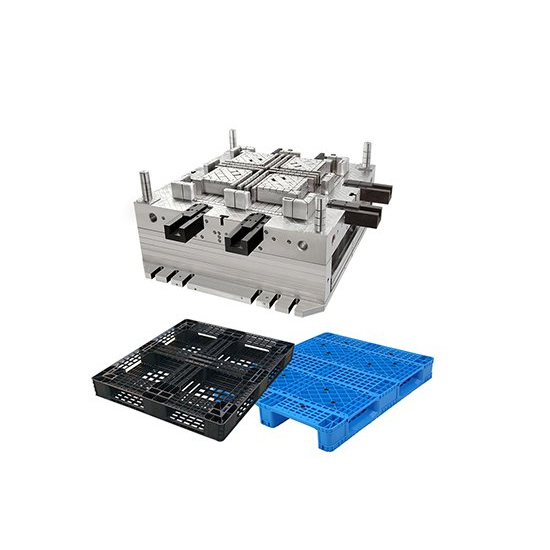
Maximizing production ROI requires a rigorous evaluation of your engineering choices. You must evaluate mold steel selection, advanced cooling architectures, and strategic gating systems. Doing this before committing to a heavy duty pallet mold prevents costly manufacturing delays. We will explore how to identify core failure points. You will learn strategies to select robust materials. We also cover practical methods to optimize cycle times for long-term production stability.
Mold steel selection (e.g., P20 vs. 718H) directly dictates tooling lifespan and maintenance intervals for high-tonnage production.
Integrating conformal cooling and Beryllium Copper inserts can reduce cycle times by 15–30%, significantly lowering per-part manufacturing costs.
Optimizing pallet weight without sacrificing dynamic load capacity requires precision Design for Manufacturability (DFM) and mold flow analysis.
Vetting mold manufacturers should focus on their validation protocols, including T1 sampling transparency and cooling efficiency data.
Upgrading to heavy-duty production exposes severe weaknesses in legacy tooling. Legacy equipment rarely handles elevated tonnage well. You face high scrap rates almost immediately. You also experience premature equipment fatigue. Machine operators struggle to maintain consistent output. Maintenance teams spend hours diagnosing mechanical issues. This unexpected downtime destroys your weekly production targets.
You must analyze how standard molds fail under extreme injection pressures. Heavy-duty pallet manufacturing demands immense force to pack the cavity. Standard core structures easily deflect under this pressure. This deflection creates uneven wall thicknesses across the final part. You will also see excessive flash generation along parting lines. Flash requires manual trimming by floor staff. Manual trimming destroys production efficiency and introduces human error.
Thick-walled pallet sections store immense heat during the injection phase. Inadequate cooling channels cannot remove this heat fast enough. Operators often artificially inflate cycle times to prevent part warpage. They leave the mold closed longer to force stabilization. Long cycles destroy your profit margins. Identifying these thermal bottlenecks is the first step toward profitable manufacturing.
Pallets feature complex ribbing and deep draft requirements. Improper draft angles cause the shrinking plastic to stick inside the cavity. Ejection mechanisms then punch through or severely warp the hot plastic. Warped pallets fail automated racking compatibility tests. They cannot integrate into modern automated storage systems. Consequently, they become unusable scrap.
Material choices dictate how long your tooling survives. You must assess mold steel grades based on specific hardness ratings. Machinability and thermal conductivity also matter greatly for long-run production. Selecting the wrong steel guarantees premature failure under high-tonnage clamping forces.
Comparing baseline steels against premium options reveals distinct operational differences.
P20 Steel: It is a cost-effective baseline. It works acceptably for mid-volume production runs. However, abrasive recycled resins wear it down rapidly. You must apply specialized surface hardening treatments to extend its viable life.
718H / DIN 1.2738: These pre-hardened options are vastly superior. They offer excellent wear resistance straight from the mill. They maintain rigid structural stability for high-volume industrial pallet mold applications. Their toughness prevents micro-cracking during continuous 24/7 operations.
Sliders, lifters, and gating inserts endure severe mechanical friction. Specifying hardened steel for these active parts is an absolute necessity. We strongly recommend H13 steel for these areas. It prevents premature wear and maintains tight tolerances. Ignoring these moving components leads to flash and dimensional drift.
Premium steel carries a 15-25% higher upfront premium. You must balance this initial expense against mid-run tooling overhauls. Replacing a cracked P20 core mid-production ruins delivery schedules. Premium steel prevents these financial disasters. The investment pays for itself by eliminating catastrophic mid-run breakdowns.
Steel Grade | Hardness Range | Best Application | Cost Profile |
|---|---|---|---|
P20 Steel | 28-32 HRC | Mid-volume, non-abrasive resins | Cost-effective baseline |
718H / DIN 1.2738 | 33-38 HRC | High-volume, heavy-duty production | Premium but high ROI |
H13 (Hardened) | 48-52 HRC | Sliders, lifters, inserts | High upfront cost |
Engineering must focus on accelerating plastic solidification. You must do this without inducing residual stress. Residual stress causes post-ejection warpage. A well-engineered large part injection mold removes heat uniformly. This uniformity ensures the pallet remains perfectly flat after cooling.
Map thermal hotspots: Identify thick intersections where heat pooling occurs.
Design custom cooling loops: Route water directly to these isolated thermal zones.
Select high-conductivity materials: Insert specialized metals to draw heat away quickly.
Balance flow rates: Ensure turbulent water flow maximizes heat transfer efficiency.
Straight-line drilling is obsolete for complex pallet designs. You need advanced conformal cooling channels. They precisely map the complex geometry of ribs and decks. Furthermore, you should utilize Beryllium Copper (BeCu) inserts. Place them in hard-to-reach core areas where water lines cannot physically go. BeCu rapidly dissipates heat from these dense plastic intersections.
Evaluate multi-drop valve gate systems during the design phase. Brands like Yudo or Husky perform exceptionally well in extreme conditions. They ensure uniform melt distribution across the massive cavity. They minimize weak weld lines. They also eliminate cold runner waste entirely. This saves tons of material over the production lifecycle.
Targeting specific cycle time reductions is highly profitable. Moving from a 120-second cycle down to an 85-second cycle transforms your factory output. Calculate the annualized savings to justify the initial hot runner investment. Faster cycles mean fewer machine hours per order. They also reduce overall factory energy consumption. You free up injection machines for additional client projects rapidly.
A lighter pallet reduces overall shipping weight. This reduction generates immediate freight savings for logistics operators. However, heavy-duty applications demand high dynamic load capacities. They also require exceptional static load capabilities. Racking systems place immense localized stress on the pallet structure. You must engineer the design to withstand these intense forces.
Mold design strictly dictates the optimal rib-to-wall ratio. If ribs are too thick, you invite severe sink marks. Sink marks compromise the flat decking required for cargo stability. If ribs are too thin, the pallet loses rigidity. Precision engineering prevents these sink marks while maximizing overall strength. We use advanced software to map stress distribution. This data guides the final steel layout. It ensures a highly robust logistics pallet mold capable of bearing immense weight daily.
Evaluating gas-assist compatibility during the design phase is crucial. GAIM hollows out thick structural sections internally. This technique saves significant resin weight. It also accelerates cooling by removing heat-dense plastic cores. Nitrogen gas pushes the molten plastic against the cavity walls. This pressure ensures an excellent surface finish. It also prevents internal voids or severe warping.
Many facilities rely heavily on High-Density Polyethylene (HDPE) regrind. Others utilize Polypropylene (PP) recycled materials to stay competitive. Regrind materials exhibit unpredictable mold shrinkage rates. You must adjust your cavity dimensions to accommodate these variations. Recycled resins also generate significant off-gassing during injection. You must incorporate aggressive venting designs. Proper venting eliminates burn marks on the finished product. It also prevents short shots in deep rib sections.
Partnering with unverified vendors creates massive implementation risks. You often receive poorly engineered equipment. These cheap solutions require continuous welding, polishing, and mechanical tuning. Production stops frequently. Maintenance crews spend hours resolving severe flash issues. Your initial savings quickly evaporate due to constant downtime. Securing reliable heavy-duty plastic pallet tooling demands strict vendor vetting.
Demand comprehensive DFM reports during the quotation phase. Require detailed mold flow analysis documents. These reports must prove fill balance. They must also demonstrate high cooling efficiency visually. Demand this data before anyone cuts steel. Verify the manufacturer possesses high-precision machinery. They must operate massive 5-axis CNC machines. Building a precise warehouse pallet mold requires exact tolerances. Only advanced CNC centers can achieve this precision consistently across large blocks of steel.
Structuring trial expectations protects your capital investment. You must establish acceptable parameters prior to final sign-off.
Define clear T1 sampling goals for initial fill testing and baseline dimension checks.
Establish T2 requirements for cooling efficiency mapping and cycle time verification.
Mandate T3 continuous run tests to prove thermal stability over extended production hours.
Set strict tolerances for part weight consistency across multiple consecutive shots.
Demand exact dimensional accuracy validation for automated racking compatibility.
Sourcing specialized manufacturing equipment is a capital-intensive decision. Upfront engineering directly dictates your long-term profitability. Rushing the design phase causes endless production delays. You must scrutinize material grades and thermal management systems deeply before approving any blueprints.
Prioritize mold makers who provide transparent analytical data. They should offer detailed cooling efficiency reports. They must prove steel provenance with legitimate mill certificates. Favor partners who offer solid cycle time guarantees. Avoid suppliers competing solely on initial cut-rate quotations. Superior engineering always yields superior production metrics.
Initiate a technical consultation with prospective manufacturers immediately. Require them to present a thorough DFM study. This study must address your specific dynamic load requirements accurately. It must also outline distinct strategies to hit your target cycle times. Rigorous upfront validation guarantees long-term manufacturing success.
A: With high-grade steel like 718H, longevity increases significantly. Proper preventative maintenance is also strictly required. A well-engineered system should yield 500,000 to 1,000,000 shots. Regular cleaning and lubrication extend this operational lifespan.
A: Cooling accounts for up to 70% of the entire injection cycle. Reducing cooling time by just 10 seconds drastically improves throughput. We use conformal cooling to achieve this drop. This reduction significantly lowers machine hour rates. It directly decreases your per-part manufacturing expenses.
A: Yes, you can achieve this through the use of interchangeable inserts. However, this approach requires a highly precise base structure. Interchangeable blocks slightly increase tooling complexity. They also raise the initial engineering cost. The manufacturing flexibility often justifies this upfront investment.
A: Always request a preliminary Mold Flow Analysis. You must also demand a detailed Bill of Materials. This document must specify steel brands and hot runner brands clearly. Finally, secure an estimated cycle time guarantee before signing any contracts.