Views: 0 Author: Site Editor Publish Time: 2026-06-23 Origin: Site
Procuring a commercial vehicle bumper mold represents more than a simple tooling expense. It serves as a critical capital investment driving long-term unit economics. Heavy-duty trucks and commercial fleets demand extremely durable components. These bumpers require high impact resistance to survive harsh environments. They need strict lightweighting to improve overall fleet fuel efficiency. They also demand flawless Class A surface finishes for brand aesthetics. Sheet molding compound (SMC) delivers these essential traits perfectly. However, profitability relies entirely on flawless mold execution.
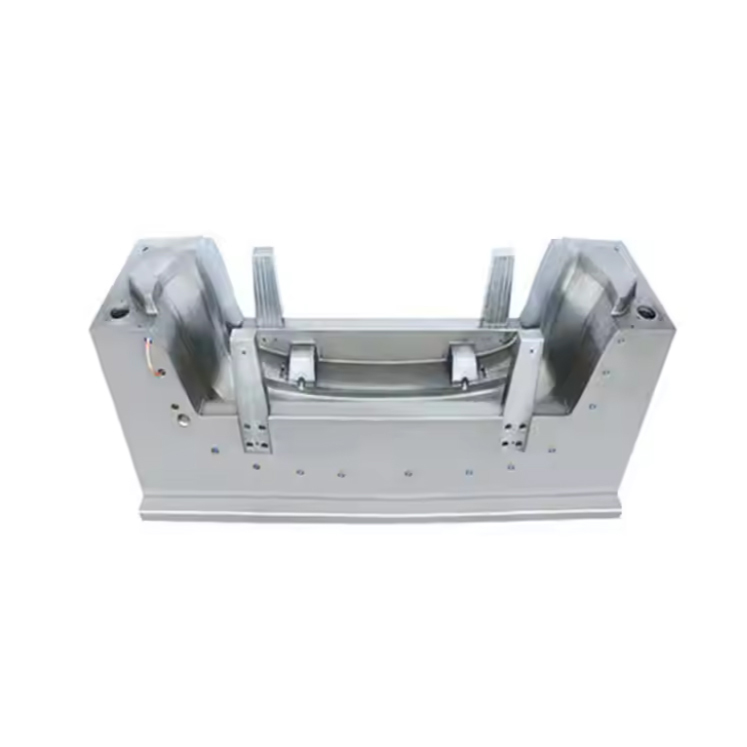
Optimizing an smc bumper mold requires balancing complex geometry with strict thermal management. Operators must also control precise material flow during high-pressure cycles. Minor compromises in tool design lead to exponentially higher scrap rates. Poor tooling extends cycle times drastically. It also compromises structural integrity by causing internal voids. This comprehensive guide explores how advanced mold engineering protects part quality. We will examine the physics of curing and shear edge optimization. You will also learn exactly how to evaluate potential tooling partners effectively.
Cycle time in SMC molding is predominantly dictated by the mold's thermal management system and heating layout.
Part quality—specifically porosity, flash thickness, and dimensional stability—is directly tied to shear edge design and vacuum assistance.
Selecting an automotive composite mold partner requires evaluating their CAE (Computer-Aided Engineering) capabilities and historical success with large-tonnage compression presses.
Upfront investments in premium mold steel and advanced ejection systems reduce long-term piece price and rework costs.
Commercial bumpers feature large, thick-walled geometries. They endure harsh road conditions daily. Inefficient molds cure these thick parts unevenly. Uneven curing creates severe structural weak points within the composite matrix. It also causes severe warping right after demolding. Engineers must solve these complex geometric challenges early in the design phase. A successful SMC compression mold must achieve three specific production outcomes reliably.
First, it ensures consistent part weight across every single cycle. Consistent weight guarantees uniform structural properties. Second, it minimizes flash escaping the cavity. This directly reduces manual post-processing labor on the factory floor. Third, it locks in a predictable, fast cycle time. Manufacturers typically target under three to five minutes for large commercial parts. Any deviation from these targets destroys production margins.
High-precision tooling demands higher initial capital expenditure. However, this upfront investment drastically lowers overall lifecycle expenses. Better molds reduce manual deflashing dependency. They also significantly lower defect rates over thousands of production cycles. Flimsy tools warp under immense compression pressure. Premium tools maintain their structural integrity indefinitely. They guarantee consistent dimensional stability. You avoid the hidden expenses of constant tool maintenance. You also prevent unexpected line stoppages during peak production seasons.
SMC requires precise, uniform heat to crosslink the thermosetting resin effectively. Typical curing temperatures range from 130°C to 160°C. The physics of cure times remain incredibly strict. Uneven heating extends the cycle time dramatically. Operators must extend press cycles to accommodate the coldest spot inside the mold cavity. This delay hurts overall production output. It wastes valuable press time and increases energy consumption.
Evaluating heating systems for a commercial vehicle bumper mold requires analyzing reliability carefully. You must also evaluate temperature consistency across massive surface areas. Engineers generally choose between thermal fluid, steam, and electric systems. Thermal oil provides excellent uniformity across large, flat surfaces. Steam offers rapid heat transfer for faster start-ups. Electric cartridges provide localized temperature boosting in hard-to-reach areas.
Heating Method | Primary Advantage | Best Application |
|---|---|---|
Thermal Fluid (Oil) | Exceptional temperature uniformity across large spans. | Massive commercial bumpers with consistent wall thickness. |
Steam Heating | Rapid heat transfer and quick tool heat-up times. | High-volume production lines requiring fast start-ups. |
Electric Cartridges | Targeted, localized heating control. | Complex geometries requiring specific thermal boosting. |
Conformal heating channels offer the absolute best performance. They map precisely to the bumper’s complex contours. This layout prevents thick structural ribs from under-curing. It also stops thin aesthetic edges from burning. Conformal lines maintain a tight temperature delta across the entire tool surface. The variance rarely exceeds three degrees Celsius.
Insulation strategies remain equally crucial for efficiency. You must use high-grade insulation plates behind the mold base. These plates prevent heat transfer from the mold block to the press platens. Proper insulation maintains strict thermal efficiency. It prevents massive heat loss into the surrounding environment. It also reduces energy consumption during long, continuous production runs. Insulating the tool correctly stabilizes the entire molding process.
SMC requires immense pressure to flow and fill the mold cavity completely. Typical molding pressures reach 10 to 20 MPa. The parting line and shear edge design handle critical mechanical functions. They trap holding pressure securely inside the cavity. They also allow trapped atmospheric air to escape safely before the resin cures.
Industry standards dictate strict shear edge clearances. Builders typically target gaps between 0.05mm and 0.1mm. This tight tolerance prevents excessive flash from escaping the tool. A robust shear edge design in a sheet molding compound mold minimizes manual trimming drastically. Operators spend significantly less time grinding rough edges. This direct optimization reduces labor hours required per completed part. We highly recommend hard-facing the shear edges. Adding a layer of hardened material extends the lifespan of these critical friction zones.
Vacuum assistance integration elevates part quality even further. Deep-draw bumper fascias easily trap air during rapid compression. Integrating a vacuum system within the tool design pulls out these trapped gases proactively. This technique virtually eliminates surface blisters. It eradicates porosity issues entirely. It also prevents short shots in complex geometric zones.
Consider these advanced best practices for shear edge engineering:
Maintain tight clearances consistently to control resin bleed effectively.
Apply hard-facing techniques to extend shear edge life dramatically.
Align the parting line precisely with the natural draft of the bumper.
Inspect shear edges regularly for micro-abrasions and heat checking.
Use precision grinding to finalize the telescoping angles perfectly.
Large commercial bumpers present severe draft angle constraints. They often feature complex geometric undercuts. Demolding must occur smoothly every single time. The process must not induce internal stress fractures. It must completely avoid scuffing the visible exterior surface. A perfectly balanced ejector pin layout solves these mechanical challenges. Engineers must distribute ejection force evenly. They must map the force across the entire bumper surface area. This prevents localized stress points. Poor ejection twists the hot part. It creates dimensional warping immediately after cooling.
Class A finishes require specialized handling protocols. If the bumper requires a Class A finish straight from the press, In-Mold Coating (IMC) becomes vital. The tool must accommodate IMC injection perfectly. The design must prevent internal pressure drops. It must eliminate chemical leakage entirely around the seals. Proper IMC integration eliminates downstream priming steps. You receive a paint-ready surface immediately upon demolding.
Mold surface treatments extend tool longevity dramatically. Hard chrome plating protects the core and cavity blocks from severe wear. Proper plating extends the lifespan of reliable fiberglass bumper tooling. It maintains an unblemished part surface over hundreds of thousands of molding cycles. Glass fibers act as severe abrasives during material flow. Unprotected steel wears down very quickly. Chrome plating provides a hard, slick barrier. It helps cured parts release easily. It preserves the mirror-like finish required for premium commercial applications.
Procurement teams must move beyond basic initial quotes. Focus intensely on strict engineering validation instead. Prioritize risk mitigation over cheap upfront tool pricing. You must verify capabilities before cutting any raw steel. Selecting an automotive composite mold partner requires investigating several key dimensions thoroughly.
Evaluate these specific engineering dimensions rigorously:
CAE & Mold Flow Analysis: Does the vendor provide simulated flow analysis? They must predict weld lines accurately. They should simulate air traps and fiber orientation prior to manufacturing. Accurate simulation prevents costly downstream rework.
Steel Selection: Are they specifying appropriate steel grades? Engineers should use P20, 1.2738, or H13 for high-wear areas. The steel must withstand the highly abrasive nature of glass-fiber-reinforced SMC.
Tryout Capabilities: Do they maintain heavy in-house compression presses? Truck bumpers often require massive presses exceeding 2,000 tons. The vendor must validate the mold under real-world production conditions. They must provide detailed first article inspection reports.
Watch out for serious engineering red flags. Beware of vendors who under-spec mold wall thickness intentionally. They do this simply to save on raw steel expenses. Thin walls lead to catastrophic tool deflection. High compression tonnage bends weak steel easily. Deflection ruins dimensional stability immediately. It accelerates shear edge wear dramatically. It guarantees high part rejection rates. Always verify the overall tool weight against established industry standards.
In commercial vehicle manufacturing, the mold acts as the primary variable. It dictates long-term production profitability completely. Cycle times and surface quality become permanently locked in during the initial design phase. Precision engineering prevents downstream assembly bottlenecks. It eliminates excess scrap completely. Proper thermal management slashes curing times reliably. Advanced shear edges eliminate tedious manual trimming.
Request a detailed DFM (Design for Manufacturability) review for your specific bumper CAD data. Emphasize the urgent need to align part design with actual compression molding realities early. Partnering with experienced tooling experts ensures predictable, high-yield manufacturing runs. A robust mold safeguards your production schedule and protects your final product quality.
A: A well-maintained hardened tool typically yields 300,000 to over 500,000 shots. The exact lifespan depends heavily on the chosen steel grade. Premium steels like H13 resist the abrasive glass fibers much better. Applying hard chrome plating and scheduling regular shear edge maintenance significantly extend tool longevity.
A: SMC offers significantly higher impact strength. It provides superior thermal stability compared to standard thermoplastics. Tooling costs for massive SMC parts remain lower than large-scale injection molds. SMC resists harsh chemicals and UV degradation better. This makes it ideal for heavy-duty commercial environments.
A: Modifying an existing tool presents significant technical limitations. Retrofitting internal heating channels proves extremely difficult. You risk compromising the tool's structural integrity completely. Optimizing cycle times on existing molds usually involves adjusting press parameters carefully. You might also modify the SMC material formulation to accelerate curing.
A: Blistering results primarily from trapped air and excess moisture. Poor mold venting prevents expanding gases from escaping. Inadequate shear edge design traps pressure unevenly. Insufficient mold temperatures can also trap moisture within the resin. Integrating active vacuum assistance usually resolves chronic blistering issues completely.