
Views: 0 Author: Site Editor Publish Time: 2026-04-17 Origin: Site
The production of car bumpers is an essential part of the automotive industry, and car bumper molds play a crucial role in shaping these essential components. A car bumper mold ensures that the final product is consistent in quality, design, and durability. Given the importance of bumpers in terms of both safety and aesthetics, understanding the manufacturing process of a car bumper mold is vital for ensuring the overall quality and efficiency of the production process.
In this article, we will explore the complete manufacturing process for car bumper molds, including each key step involved from design to production. We will discuss the materials used, the technology implemented, and the critical factors that determine the success of the mold. Whether you're an engineer, a manufacturer, or simply interested in automotive production, this guide provides valuable insights into how car bumper molds are made and their role in the larger manufacturing process.
A car bumper mold is a specialized tool used in the process of manufacturing bumpers for vehicles. These molds are designed to shape materials like plastic, rubber, or metal into the desired form for bumpers, ensuring they meet both functional and aesthetic requirements. Molds are used in various forming processes, such as injection molding, blow molding, and compression molding, which are essential for creating high-quality bumpers at scale. These molds are typically produced with high precision to ensure the bumper fits perfectly with the rest of the vehicle's body structure and adheres to safety regulations.
Car bumper molds are made using advanced technologies and materials to ensure that they can withstand high-pressure environments and extreme temperatures, which are common in automotive manufacturing. They must also be durable enough to handle the repeated use of the molding process without warping or degrading over time. With the growing demand for high-quality automotive components, the process of making car bumper molds has become more intricate and specialized.
The design phase is the first and one of the most important steps in the creation of a car bumper mold. This stage involves collaboration between designers and engineers to determine the precise dimensions, structure, and material specifications required for the mold. The design process is based on the bumper's final shape, including considerations for aerodynamics, safety, aesthetics, and functionality.
During the design phase, the following factors are considered:
· Material selection: Different types of materials are selected based on the vehicle model and the desired properties of the bumper (e.g., rigidity, flexibility, or impact resistance).
· Mold geometry: The shape and size of the mold must be designed to match the bumper's specifications, ensuring proper fit and function.
· Flow analysis: Engineers perform simulations and flow analysis to ensure that the material used in the mold will flow smoothly and fill the entire mold cavity without defects.
The design phase often utilizes CAD (Computer-Aided Design) software to create detailed 3D models of the mold. These models allow for precise adjustments and simulations before physical production begins.
Once the design is finalized, the next step is to select the appropriate materials for the mold construction. The materials chosen must be durable enough to withstand repeated use and high temperatures. The most common materials used in the production of car bumper molds include:
· Steel: High-carbon steel or tool steel is often used for creating molds that need to endure high pressure and temperature.
· Aluminum: Lightweight and easy to machine, aluminum is used for molds that require lower production volumes or faster turnarounds.
· Hardened alloys: These materials are used for high-precision molds that demand exceptional wear resistance.
After material selection, the mold is constructed using advanced machining techniques, including CNC (Computer Numerical Control) milling, EDM (Electrical Discharge Machining), and laser cutting. These techniques ensure that the mold is made to precise specifications and that all components fit together seamlessly.
With the mold constructed, the next step is to set up the molding process. This setup involves selecting the appropriate forming method based on the material to be molded and the specifications of the car bumper.
The most common molding processes used in car bumper production are:
· Injection Molding: This process involves injecting molten plastic or rubber into the mold cavity under high pressure. It is the most commonly used process for producing plastic bumpers and ensures that the final product has a high degree of precision.
· Blow Molding: Used for hollow bumpers or components with a hollow center, blow molding involves inflating a molten material within the mold cavity.
· Compression Molding: Used for rubber or composite bumpers, this process involves compressing a preheated material within the mold to form the desired shape.
The molding process is carefully monitored to ensure that the material fills the mold completely, is free from air pockets, and meets the required quality standards.
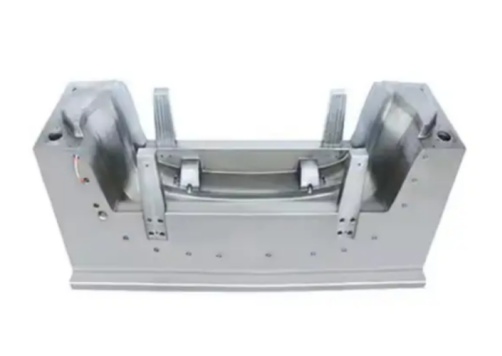
After the molding process is completed, the bumper must be allowed to cool and solidify within the mold. Cooling time depends on the material used and the thickness of the bumper. During this stage, the material hardens and takes on its final shape.
Once cooling is complete, the mold is opened, and the bumper is carefully removed. This step requires precise handling to avoid damaging the bumper or the mold. Demolding is a critical step in the process, as improper removal can result in defects or surface imperfections on the bumper.
After the bumper has been demolded, it undergoes finishing and quality control procedures. These procedures include:
· Trimming: Excess material around the edges of the bumper is trimmed away to ensure a clean finish.
· Surface treatment: Depending on the bumper's material and finish, it may undergo surface treatments such as painting, coating, or polishing.
· Inspection: The bumper is thoroughly inspected for any defects, such as warping, surface imperfections, or dimensional inaccuracies. Advanced inspection techniques, including 3D scanning and dimensional checks, may be used to ensure the bumper meets the required specifications.
Only bumpers that pass the quality control tests are deemed ready for packaging and delivery.
Molding Process | Material Used | Key Advantage | Common Application |
Injection Molding | Plastic, Rubber | High precision, quick cycle times, mass production | Standard plastic bumpers |
Blow Molding | Plastic, Composite | Ideal for hollow parts, strong structural integrity | Hollow bumper components |
Compression Molding | Rubber, Composites | Excellent for producing rubber bumpers with high strength | Rubber bumpers and composite parts |
Once the bumper has passed all quality checks, it is ready for packaging and delivery. The packaging process ensures that the bumpers are securely protected during transport to prevent damage. Packaging materials such as bubble wrap, foam padding, or custom-fit boxes are often used to provide extra protection. The bumpers are then loaded into shipping containers and sent to the vehicle assembly plants.
In the automotive industry, the quality and efficiency of car bumper production are critical factors that influence both the vehicle’s performance and its aesthetics. The process of creating car bumper molds is a highly detailed and technical one, requiring precision at every step. From design to production, each phase plays a role in ensuring that the final product meets both safety standards and customer expectations.
At Zhejiang Taizhou Huangyan Shengfa Mould Co., Ltd., we specialize in the design and production of high-quality car bumper molds. Our advanced manufacturing techniques and commitment to precision ensure that every mold we create is reliable and durable. We understand the importance of efficiency in the automotive manufacturing process, which is why we offer mold solutions that are optimized for fast production and high-quality output. For more information about our services and to discuss how we can support your car bumper mold needs, please reach out to us today.
Common materials used for car bumper molds include steel, aluminum, and hardened alloys. The choice of material depends on the desired properties, such as durability, wear resistance, and heat resistance.
The time required to manufacture a car bumper mold can vary depending on its complexity, but it typically takes several weeks for the design, material selection, construction, and testing phases to be completed.
The most common molding processes for car bumpers are injection molding, blow molding, and compression molding. Each process is selected based on the material used and the specific requirements of the bumper.
Quality control involves thorough inspections of the mold and the finished bumper. This includes checking for dimensional accuracy, surface quality, and structural integrity. Advanced inspection techniques such as 3D scanning are often used to ensure precision.


